Our Location
304 North Cardinal St.
Dorchester Center, MA 02124

304 North Cardinal St.
Dorchester Center, MA 02124

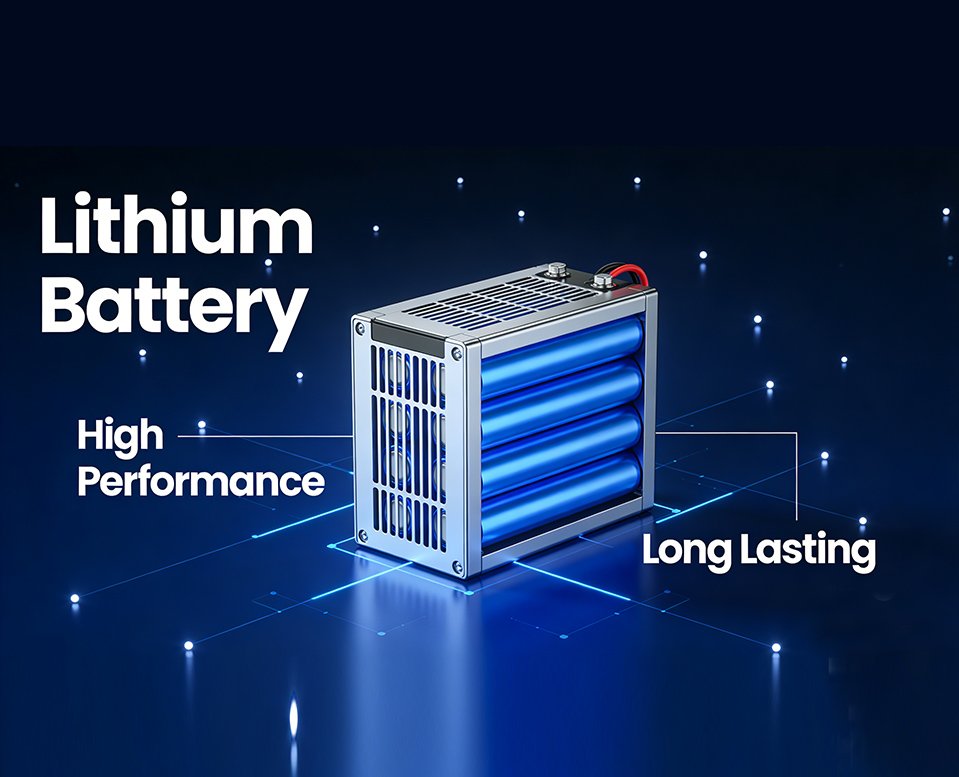
How to Fix a Drone Battery That Won’t Charge After Long Storage (LiPo Revival Guide)
A common issue for drone pilots is discovering that a battery, especially a common Lithium Polymer (LiPo) pack, seems completely dead after being stored away for months. It won’t charge, and your charger might flash an error. This is often due to “voltage depression” or a dormant state caused by self-discharge. Don’t throw it away just yet—it might be revivable with a careful, low-current “wake-up” process.
This guide provides safe, step-by-step instructions to potentially recover your drone battery, covering LiPo, LiFePO4, and NiMH types, and how to tell if the revival was truly successful.
Why Do Stored Drone Batteries “Die”?
During storage, all batteries self-discharge slowly. If left for too long (especially without being stored at the proper “storage voltage”), the charge can drop so low that the voltage per cell falls below the safe minimum threshold. For LiPo batteries, this is typically around 3.0V per cell. Most smart chargers have a low-voltage cutoff to protect against dangerous charging attempts, so they simply refuse to start. The battery appears dead.
Safety First Warning: Reviving a deeply over-discharged battery carries risks, including fire. Never attempt to revive a battery that is puffy/swollen, damaged, leaking, or has punctures. Dispose of it properly. Always perform these procedures in a fire-safe area (like on a concrete floor or inside a LiPo-safe bag) and never leave it unattended.
Part 1: Step-by-Step Revival Guide by Battery Type
I. Lithium Polymer (LiPo) Battery Revival
LiPo batteries are the most common and also the most sensitive to over-discharge. They require the most caution.
What You’ll Need: A multimeter or a charger with a voltage display, and ideally a smart charger with a “LiPo Recovery,” “Low-Voltage Charge,” or “Wake Up” function (common on models like ISDT, HOTA, or older iMAX B6).
Step 1: Diagnose with a Voltage Check (CRITICAL)
Use your multimeter on the balance port to check the voltage of each individual cell inside the pack.
If all cells are above 3.0V: Your battery is not deeply discharged. You can skip revival. Use your charger’s Balance Charge mode at a low rate (0.5C) to charge it normally.
If any cell is between 2.5V and 3.0V: The battery is over-discharged but likely recoverable. Proceed with revival.
If any cell is below 2.5V: The battery is severely over-discharged. Recovery is possible but less certain, and its lifespan will be permanently reduced. Extreme caution is needed.
If any cell is below 2.0V: The battery is often considered damaged. Revival attempts are risky and may not work.
Step 2: The Low-Current Revival Process
Method A (Recommended – Using a Smart Charger):
Select the “LiPo Recovery” or similar function on your charger. If it doesn’t have one, use the Normal LiPo Balance Charge mode.
Set the charge current to an extremely low 0.1C (e.g., for a 5000mAh battery, use 0.5A).
Start the charge. Monitor it closely. The goal is to gently nudge the total pack and individual cell voltages above 3.0-3.2V.
After 10-20 minutes, stop and check the voltages. If they have risen safely above 3.0V per cell, you can cancel this cycle.
Switch to a standard Balance Charge at 0.5C-1C to complete the charge to full capacity.
Method B (Manual Method – For Experienced Users Only):
This involves using a DC power supply with current limiting. We only mention it for completeness; using a proper charger is vastly safer. If you proceed, you must set a strict voltage limit (e.g., 3.8V for a 1S battery) and a very low current (0.1C), and monitor temperature constantly.
II. Lithium Iron Phosphate (LiFePO4) Battery Revival
LiFePO4 batteries are much more tolerant of low voltages. The revival process is simpler and safer.
Process:
Check voltage per cell (nominal voltage is 3.2V). If below 3.0V, proceed.
Use your charger’s LiFePO4 (LiFe) Balance Charge mode.
Set a low to moderate charge rate (0.2C-0.5C is fine). You usually don’t need a special recovery mode.
Start charging. The charger will typically bring the voltage up normally.
Once charged, check if the battery holds voltage (around 3.6V per cell when full). If it does and isn’t puffy, it’s ready to use.
III. Nickel-Metal Hydride (NiMH) Battery Revival
NiMH batteries are very resilient. They rarely become permanently dormant.
Process:
Simply place the battery in a NiMH-specific charger.
Use a low-current “trickle” or “recondition” mode if available, or just a standard slow charge.
It may take several hours for a full charge. After one or two charge/discharge cycles, they should regain most of their capacity.
Part 2: How to Know If Your Battery Revival Was Successful
A successful revival isn’t just about getting it to charge once. You need to ensure it’s safe and holds energy.
Fully charge the battery.
Disconnect it and let it sit for 30-60 minutes.
Measure the voltage again. For a LiPo, a healthy pack will stay very close to its full charge voltage (4.18-4.20V per cell). If the voltage has dropped significantly (e.g., below 4.10V per cell), it indicates high internal resistance and a failing cell that cannot hold energy.
Use a battery checker with a load function, or…
Carefully use the battery for a very short, gentle flight (keep it low and close). Land and immediately check voltages.
The cells should all discharge evenly, and no single cell should “sag” or drop voltage dramatically under load.
The battery does not get excessively warm during charging or the light load test (slightly warm is okay, hot is bad).
There is zero swelling or puffing before, during, or after the process.
There is no strange smell.
Signs of FAILED Revival (Dispose of the Battery):
Any swelling/puffing appears.
The battery gets hot during charging.
Voltages won’t rise above 3.0V per cell during the revival attempt.
The battery cannot hold voltage after charging (it drops rapidly).
Cell imbalance is greater than 0.2V and getting worse.
Conclusion & Final Warning
Successfully reviving a dormant drone battery can save you money, but it is not a guaranteed fix for a damaged battery. It is a recovery attempt for a over-discharged one.
A revived battery is a compromised battery. Its internal chemistry has been stressed, and its total lifespan and performance will likely be reduced.
Treat it with extra caution. Never charge it unattended. Consider using it for less demanding flights.
Prevention is key. Always store your LiPo batteries at their recommended “Storage Voltage” (usually 3.80-3.85V per cell) if you won’t be using them for more than a week.
By following this guide, you can safely diagnose and potentially recover a valuable drone battery, while clearly knowing when it’s time to retire it for good.
